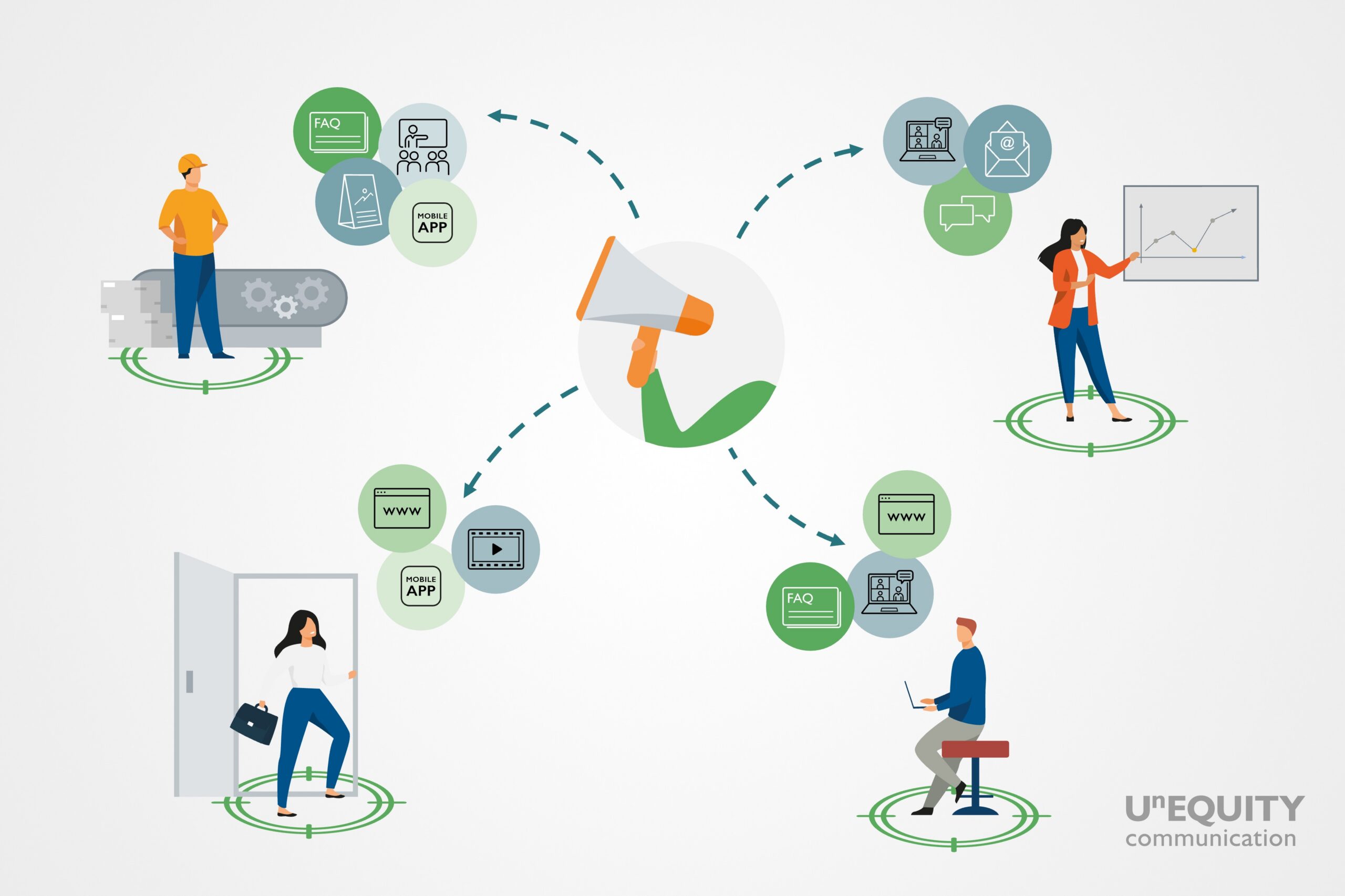
Clarity for everyone
Complex and sensitive topics need more than information—they need real communication: an authentic conversation between people. This is how understanding, trust, and loyalty grow.
In this blog post, we share practical examples of how targeted communication can make all the difference.
Communication for a future‑ready company culture
The new EU Pay Transparency Directive is part of a broader cultural shift in the workplace. Communication must lead the way in supporting, fostering, and actively shaping this cultural transformation.
Compliance first
Right now, many companies are aiming for the expected minimum legal requirements, but greater transparency in the workplace is inevitable. Organizations that navigate this shift with confidence are the ones that will unlock the full potential of pay transparency and gain a clear competitive advantage as an attractive employer.
The latest data from Indeed clearly shows the impact of transparent pay communication as early as the recruiting process:
54% more applications
45% lower hiring costs
65% fewer drop-offs in the recruiting process
82% of people in Germany support pay transparency
Trust levels rise to 85%
Our tip: Communication is only effective if it reaches the right audiences. That is why, for more than 15 years, we have combined precise analysis with a deep understanding of what each target group needs—especially when topics are complex.
Targeted communication—your gateway to effective engagement
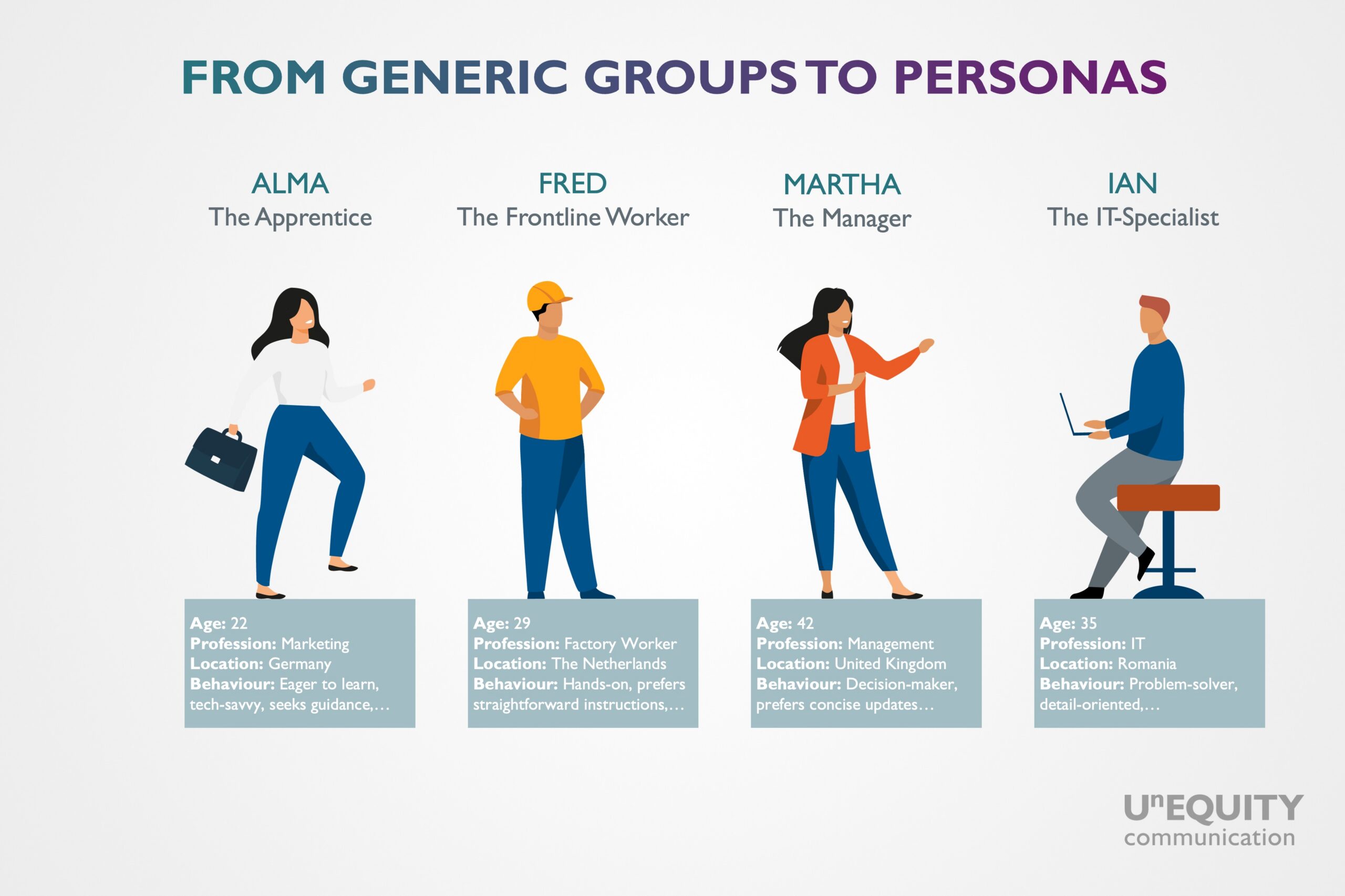
- Targeted approach
Develop personas to focus on specific, clearly defined target audiences. - Data‑driven marketing
Use data for detailed needs analysis and to shape tailored communication. - Personalization
Adapt messages, products, and content to individual recipients. - Occasion‑based communication
Reach your audiences at relevant moments with information that truly matters to them.
A practical example
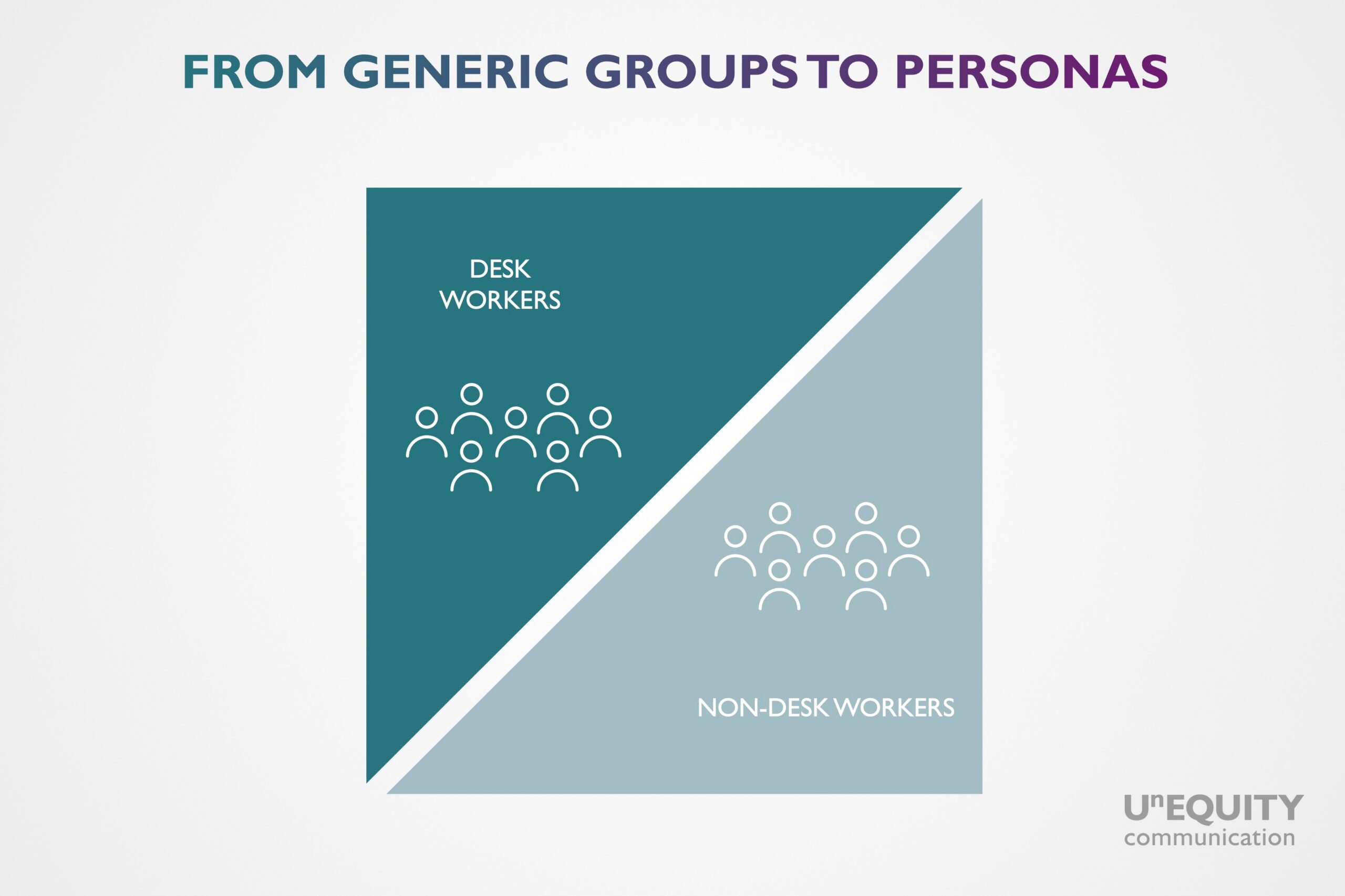
Let’s take two persona types: non-desk workers, such as production environment employees, and desk workers, such as IT staff. Communicating with these audiences requires a differentiated approach due to their very different working environments and their access to information and communication tools.
Communication needs
Desk workers generally have full access to digital communication tools such as email, the intranet, and computer-based collaboration platforms. Communication with desk workers takes place both in real time and with a delay, with a high level of interaction and a strong focus on teamwork and knowledge sharing.
These employees value clear, transparent, and well-structured communication channels that support flexible work, regardless of location or time. Social interaction is also important to them—it strengthens team cohesion and motivation. Typical stress factors include information overload and the pressure to always be reachable.
Non-desk workers often have limited—or no—access to traditional digital tools such as email or the intranet, simply because they are rarely at a screen. Communication with deskless workers generally doesn’t happen in real time and they need information to reach them whenever and wherever they can access it.
Simple, user-friendly mobile communication channels (for example, apps or a mobile social intranet) are particularly important. These channels should support all directions of communication: top-down, bottom-up, and horizontal. Organizations need to pay close attention to non-desk workers—they need to be seen and included in company decisions and company culture.
Challenges and expectations in communication
Desk workers face a high volume of information that frequently interrupts their work, the pressure to be constantly available, as well as ongoing technical changes and new tools. They want transparent, reliable, and streamlined communication structures.
Non-desk workers often face barriers to relevant information, have no real opportunity to actively participate, and little access to digital channels. They want accessible, intuitive communication tools, live formats for direct interaction, and stronger inclusion in the company’s communication culture.
Motivation through communication
Desk workers are motivated by communication that sets out clear goals and priorities, a strong sense of team cohesion, and visible appreciation and recognition.
Non-desk workers are motivated by genuine appreciation and visibility, involvement in decision-making processes, easy access to information, and the ability to provide feedback. Digital tools built specifically for deskless workers significantly boost employee motivation and retention.
Our conclusion
Address the cultural transformation proactively and involve your employees from the start. This not only builds trust—even when things get bumpy—but also encourages people to take ownership and actively contribute. In doing so, you strengthen the relationship between employer and employees and the overall motivation and performance of your teams.
As recent Gallup research shows that when employees feel genuinely involved in company processes, their performance significantly increases. At the same time, satisfaction rises, as people feel their work has meaning. Openness and transparency are real values—and clear signs of a company culture that employees actually experience day to day.
You can find more information on successful Total Rewards communication in our Downloads section and on our Projects page.
From strategy to implementation, we support you as your strategic communication partner—with compelling narratives, precisely targeted communication channels, and engaging, well-designed media.
- This article was published on
CONTACT US
If you’d like to chat about this, or any other topic, get in touch with us.
We lead People-Projects to success through communication.

Your contact person
- simone[@]unequity.com
- +49 (0) 174 / 310 78 27
- Simone Schmitt-Schillig
Share this page directly: